Four Point Design ‘22 in Review 


For Four Point Design, 2022 was an exciting year as we celebrated our 7th year in business and added two new team members to the firm. 

Again this year, we had the opportunity to provide interior design services for organizations and firms doing purposeful work in our Indiana communities. We welcomed 12 new clients to our list of project partners, which allowed us to design thousands of square feet, specify $1 million worth of furniture, and nurture priceless relationships. 

Continuing education is an important part of Four Point Design’s culture and is just one way we live our commitment to being “On point, every time.” From national healthcare conferences like the Healthcare Facilities Symposium and Expo to NeoCon, the leading event for the commercial interior design industry, our interior designers participated in a variety of events to get inspired and advance their knowledge through 150 hours of continuing education. Kudos to Victoria Numbers, who achieved the Certified Healthcare Interior Designer® credential! 

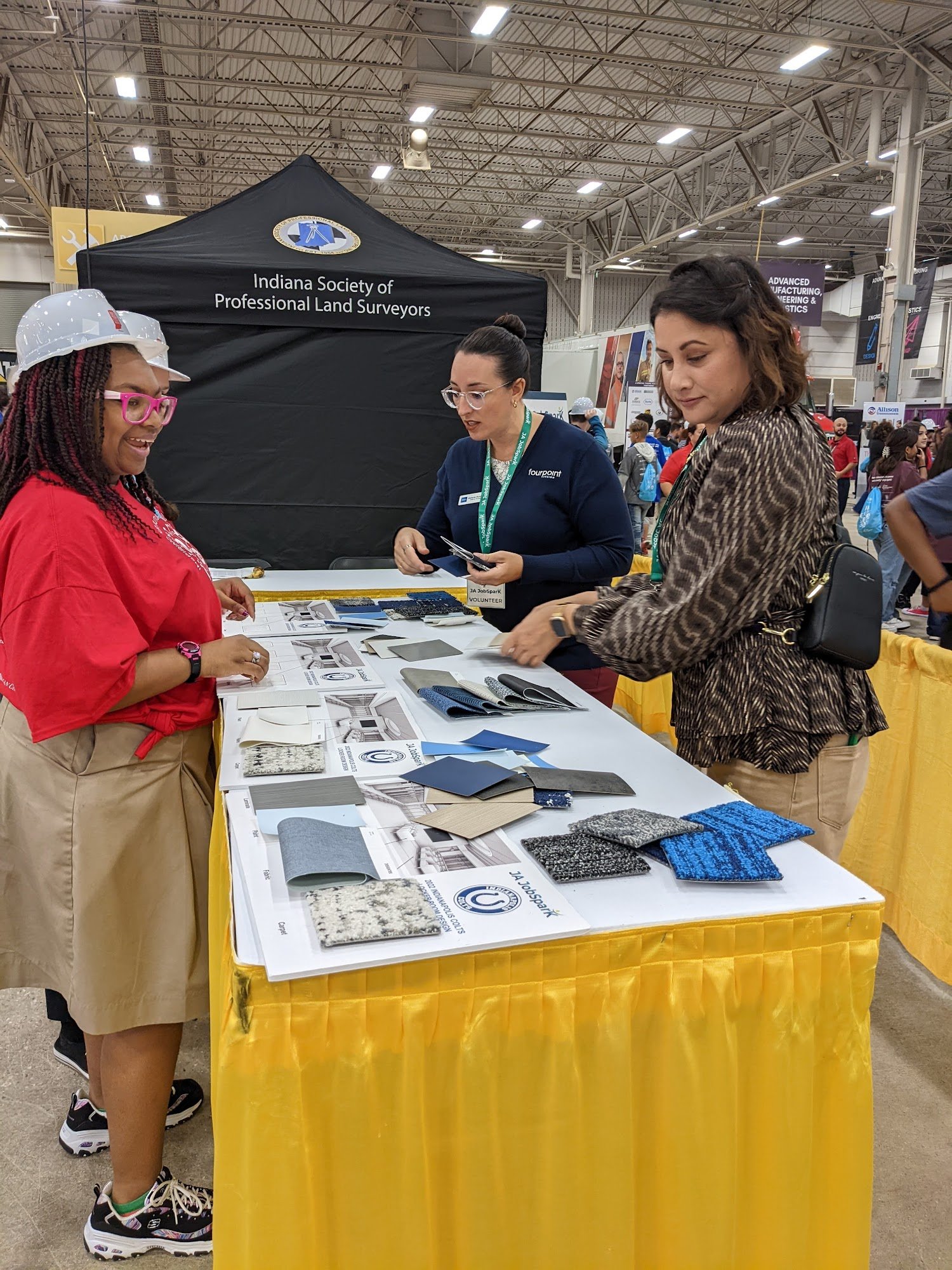
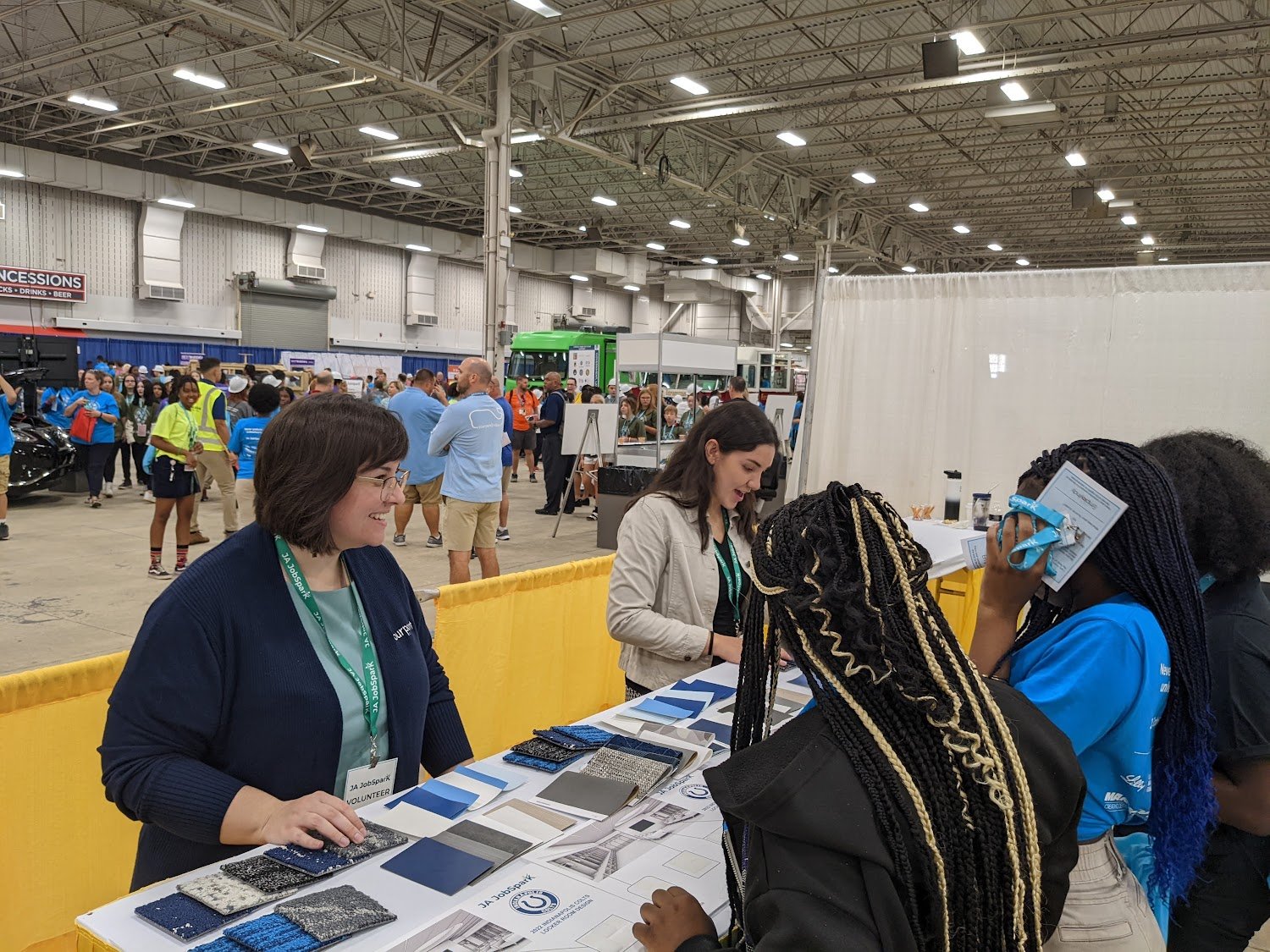
At Four Point Design, we also love to give back. Through volunteerism and contributions, we supported 11 organizations, from interacting with kids sponsoring a Little League team and working with thousands of kids at Junior Achievement Jobspark to supporting fundraisers for IU Health Foundation, Major Health Partners, and Eskenazi Health. 

To all our clients, partners, and colleagues, thanks for making 2022 a great year. We look forward to a fun and fulfilling 2023! 

Interface + IIDA Converge Summit provides multiple takeaways for advancing sustainability in interior design

Four Point Design’s Emily Pittenger, Assoc. IIDA, WELL AP, recently attended the Converge Summit, an invitation-only event hosted by the International Interior Design Association and Interface.  

Emily (front row, third from left) and fellow Summit participants.

Held in Atlanta, the immersive Summit included expert panelists focusing on activism, leadership, and community through the lens of sustainability for designers starting out and emerging in their interior design careers. Emily and her 17 fellow participants also engaged in small-group discussions about how interior design professionals can advance sustainability.

“I’m grateful to have connected with this great group of designers and am excited to continue our dialogue around sustainable practices,” Emily said.

Over the Summit’s two-and-a-half days, attendees learned about topics including:  

  • how to advance sustainability through projects, material selection, and collaboration with local product manufacturers,

  • the power of the design community to reduce carbon emissions and foster healthier communities,

  • tools and resources to help designers understand and reduce the carbon impact of building materials, and

  • Metropolis’ Climate Tool Kit—a resource available to designers as a framework for designing low-carbon spaces.

Speakers and panelists included Chidimma Abuka, MBA, MIA, Gensler; Verda Alexander, IIDA, Studio O+A; George Bandy Jr., Ind. IIDA, Fiber Industries LLC; Ronnie Belizaire, FIIDA, JLL; Chip DeGrace, Interface; Cheryl S. Durst, Hon. FIIDA, International Interior Design Association; Erin Jende, Interface; Jay Lanier, Interface; Angie Y. Lee, FIIDA, Pembroke; Avi Rajagopal, Metropolis Magazine; Jen Ruckel, 3form; Paul Shahriari, ecomedes; Anna Webb, Interface.

Summit attendees also met the IIDA Board and sustainability leaders, toured Interface’s global headquarters to learn about their sustainable and biophilic design principles, and experienced an exclusive preview to the Museum of Design Atlanta exhibit, Close to the Edge: The Birth of Hip-Hop Architecture.

WELCOME VICTORIA NUMBERS

Four Point Design is pleased to announce that Victoria Numbers, RID, MSIA, has joined the firm as a Senior Associate. Numbers has extensive experience leading design teams for clients in health, wellness, and higher education.

Victoria obtained a BS in Interior Design from West Virginia University and a MS in Interior Architecture from Philadelphia University.

She is passionate about working hand-in-hand with clients and collaborators to make a significant positive impact through purposefully designed, inclusive interior environments.

Victoria connects with the community in a number of ways, including as an adjunct faculty in the Interior Design program at IUPUI. She volunteers with the ISO and Newfields, and is a Healthcare Facilities Symposium BOA Member.

“Victoria’s ardent commitment to healthcare design, the community and mentorship, combined with an entrepreneurial spirit makes her a perfect addition to the Four Point team. Her passion for healthcare design aligns perfectly with our strategic plan for growth of the business.”

— Jamie Raymond, Partner at Four Point Design

THE FUTURE OF THE BUILT ENVIRONMENT: BALANCING PATIENT EXPERIENCE WITH SAFETY

Furniture located within healthcare settings receives substantial abuse and rigorous daily cleanings. How can you prolong the life of furniture while still cleaning and disinfecting properly?

  1. Utilize solid surface countertops with an integral sink bowl at patient care and public areas. Solid surface provides a seamless, easy to clean high touch surface. 

  2. Consider using furniture pieces with metal legs in lieu of wood. Metal withstands abuse and heavy cleaning protocols over time.

  3. For upholstered pieces, look for the following:

    • Field replaceable parts such as legs, arms, and seats.

    • Cleanouts between seat and back for ease of cleaning.

    • Field replaceable upholstered furniture covers can be changed in the field when upholstery becomes damaged or worn.

    • Wall saver legs and backs prevents chairs from damaging the walls behind.

    • Urethane or solid surface arm caps protect upholstered arms and withstand heavy cleaning protocols.

    • Ensure that all seating meets weight requirements, and integrate bariatric seating choices seamlessly.

    • Use only durable non woven textiles in your patient care areas. Be sure to understand your upholsteries warranties and cleaning recommendations. Consider that your upholsteries will last 3-5 years at a maximum, and have a plan for replacement including replaceable covers and an operational budget that supports replacement.

  4. What cleaners are recommended to kill COVID-19? See link below from Enviro Leather. https://www.ldiinteriors.com/wp-content/uploads/COVID-19-Cleaners.pdf

ESOI_10.jpg

THE FUTURE OF THE BUILT ENVIRONMENT: BALANCING PATIENT EXPERIENCE WITH SAFETY

The patient room should provide a comfortable place to heal while balancing infection control and safety. The built environment can achieve both goals using the following guidelines.

FTP patient room v2.jpg
  1. Controllable, multi-function over bed lighting provides ambient, exam, and reading light levels.

  2. The patient room TV can be used for both education and entertainment. With family members temporarily no longer allowed in patient units, it can also be used to video conference family members.

  3. Access to natural light and outdoor views are proven to improve healing times.

  4. Easy access to power and/or USB allows patients the ability to charge their devices and stay connected to family members not present.

  5. Opportunities for patients and family members to personalize the room can include a designated shelf for flowers, cards, and pictures.

  6. Sheet vinyl with heat welded seams and integral base are sometimes reserved for higher acuity rooms such as ICU, Isolation, and NICU. As healthcare design changes over the next few months, we may see more patient rooms with sheet vinyl to increase flexibility.

  7. Solid surface countertops with integral solid surface bowl sinks create a monolithic seamless surface that is easy to clean.

  8. Floating counters and casework minimize hard to reach places and allow for rooms to be disinfected quickly and efficiently.

  9. Encourage good hand hygiene practices by placing the sink next to the door and illuminating with proper light level.

  10. Cubicle curtains are no longer a standard in patient rooms. If desired, reusable cubicle curtains can be an alternative to reduce the spread of bacteria.

THE FUTURE OF THE BUILT ENVIRONMENT: BALANCING PATIENT EXPERIENCE WITH SAFETY

While we don’t yet know the full impact of COVID - 19 on the future of the built environment, what is certain is that change is coming.

How do we balance the patient experience while keeping staff, patients, and families safe?  In a series of upcoming blog posts, we will share ways the interior built environment can support the healing of patients, support of staff, and safety for everyone.  

PICU Patient Room.jpg